Beer as food
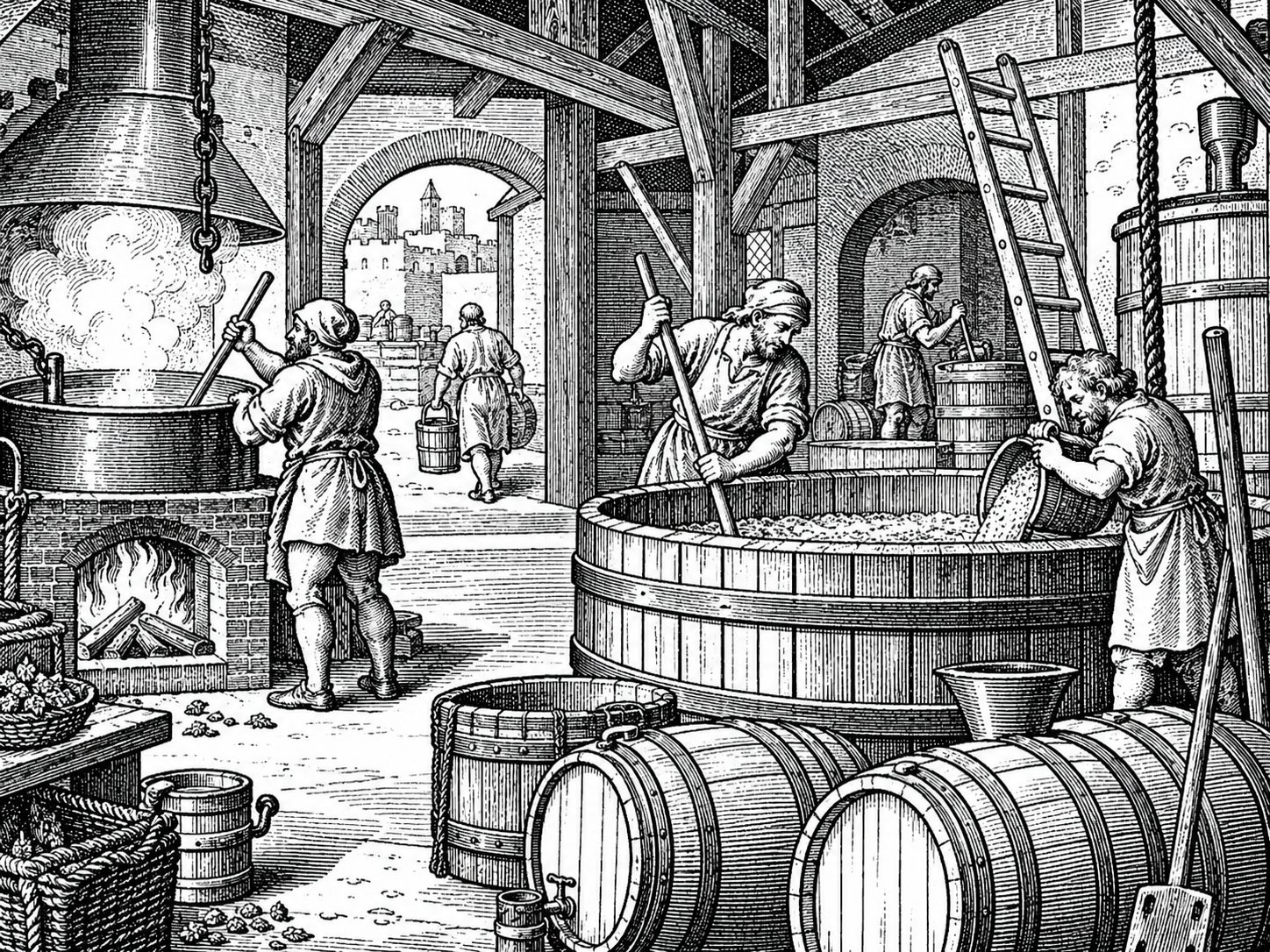
Let's start with a popular myth. People supposedly drank beer because the water was dirty. Historians are sceptical: water was drunk, wells were valued, and town authorities looked after their springs. Beer was prized for something else. It was food — filling, rich in calories, made from the same grain as bread. No wonder it was called "liquid bread".
Most of it was weak, so-called small beer. It was brewed from the second runnings of the malt, had little strength, and was enough for a full day of work in the fields. Strong beer was kept for feasts and guests.
Three breweries in one monastery
The most serious brewers of the Middle Ages wore habits. Monasteries were large estates: their own fields, their own mills, literate people who wrote recipes down. And above all, time and patience.
The Plan of Saint Gall, drawn up around 820, has survived. It shows not one brewery but three: for the monks, for distinguished guests, and for pilgrims and the poor. Beer was part of hospitality, much like a cup of tea today.
The Bavarian abbey of Weihenstephan, according to tradition, received the right to brew in 1040. The brewery still operates and is considered one of the oldest in the world. Almost a thousand years have passed, and the question "what shall we get today" is as relevant as ever.
Before hops there was gruit
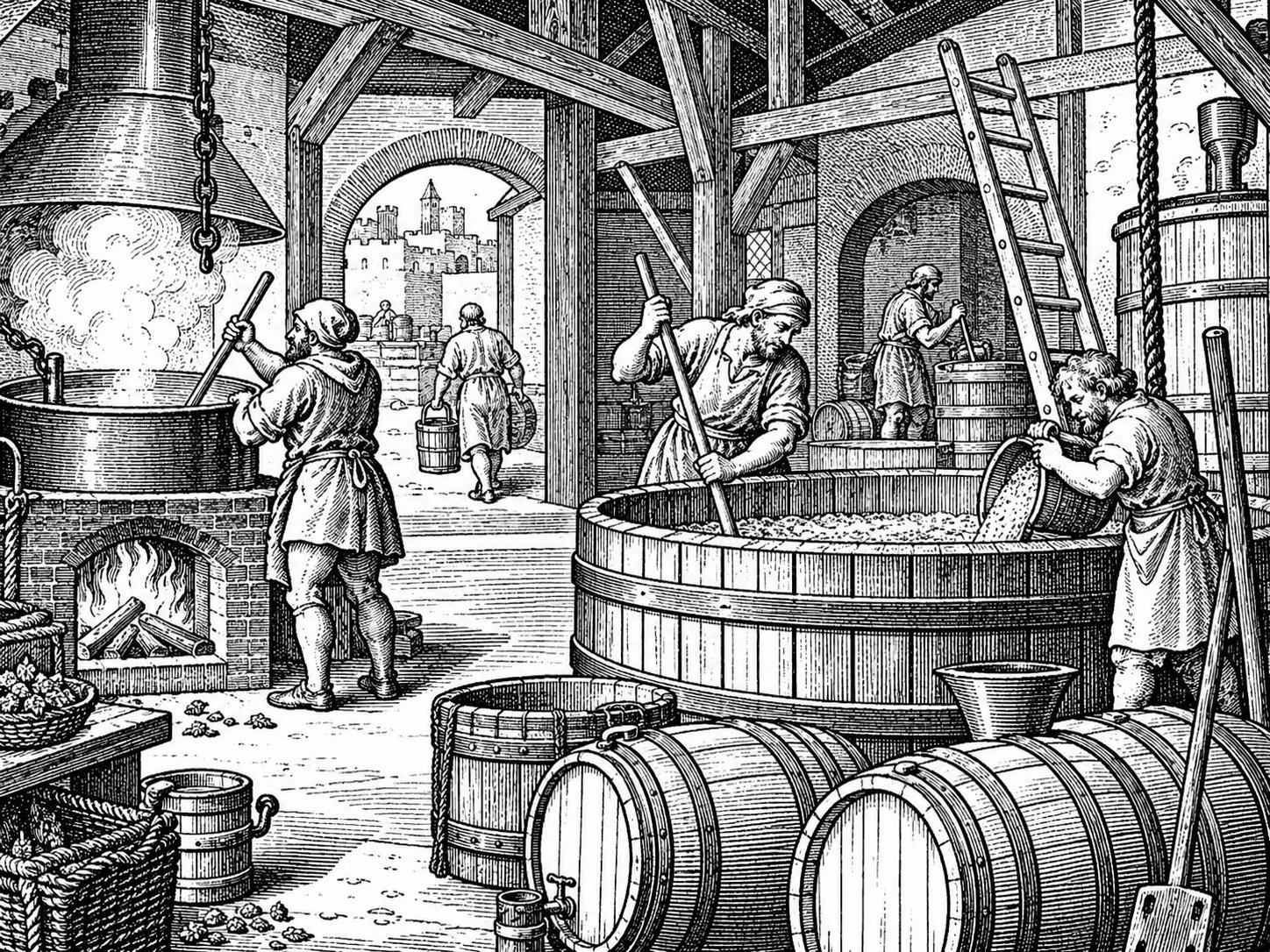
Today it's hard to imagine beer without hops. But in the early Middle Ages it was flavoured with gruit — a mix of herbs: bog myrtle, yarrow, wild rosemary, sometimes juniper. The recipe was secret, and the right to sell gruit belonged to bishops and local lords. In effect it was a tax: want to brew — buy your herbs from us.
Hops made their way slowly. In the 12th century the abbess Hildegard of Bingen wrote that their bitterness keeps a drink from spoiling. That changed everything: hopped beer kept longer, so it could travel to market. In the 13th and 14th centuries, merchants of the Hanseatic League in Hamburg and Bremen turned it into an export good.
England met the novelty with suspicion. The English even used different words: ale for the old-style unhopped drink and beer for the new hopped one from the continent. The argument went on for almost two centuries. We know who won.
Women did the brewing
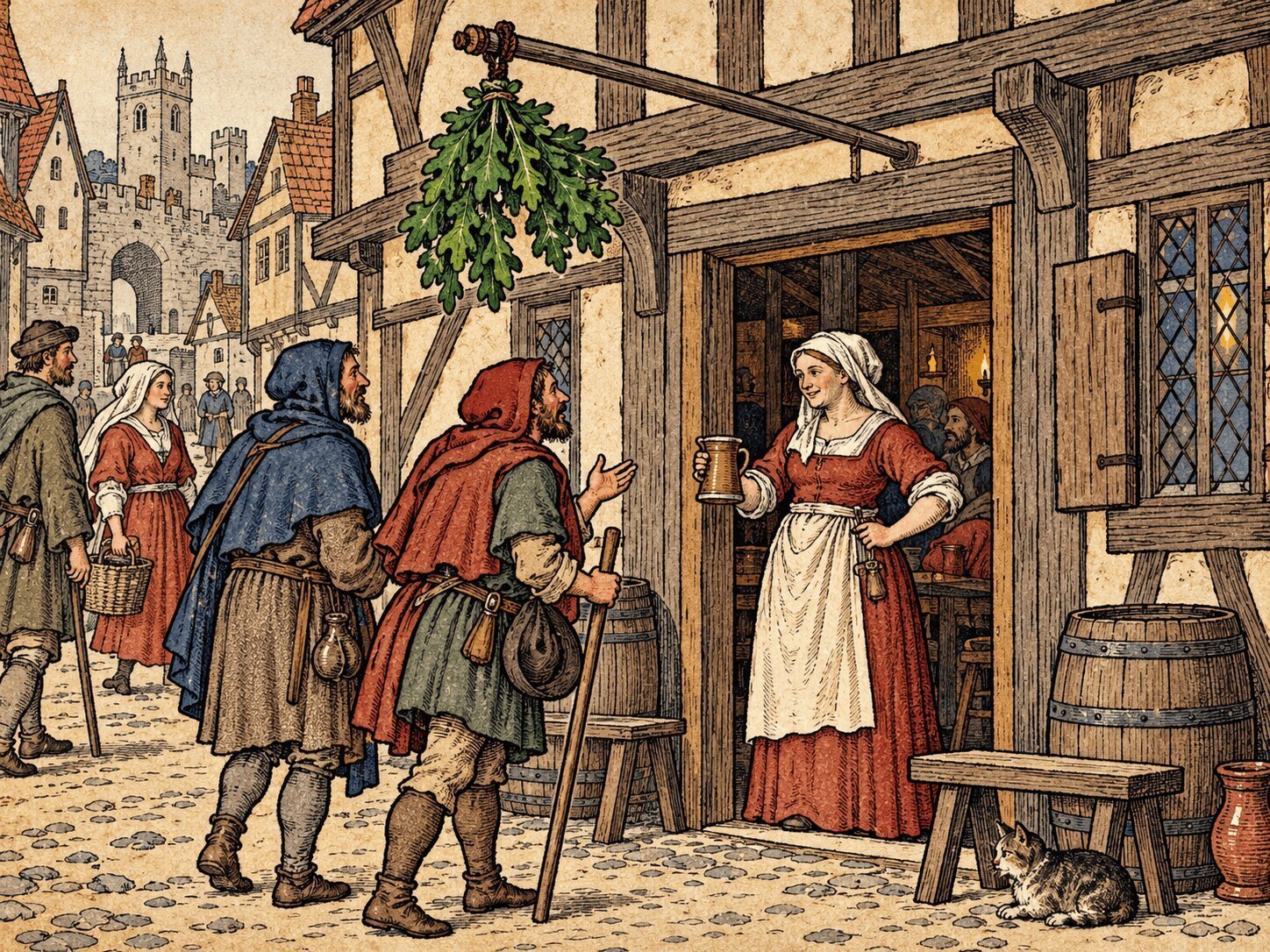
Another stereotype: a brewer is a bearded man by a kettle. In medieval England, beer for the home and for sale was more often brewed by women — alewives. When a fresh batch was ready, a pole with a bunch of greenery, the ale-stake, was hung over the door. It was the first sign saying "fresh in".
Quality was taken seriously. From 1266 England had the Assize of Bread and Ale — a law on the price and quality of bread and beer. Official ale-conners went round the alehouses, tasted the drink and could fine the brewer for bad ale or an inflated price. Reviews were left in person back then, and with consequences.
The law that outlived its era
The Middle Ages ended, but one beer law stayed. In 1516 Bavaria adopted the Beer Purity Law (Reinheitsgebot): water, barley and hops only. Not a word about yeast — and that's no mistake. It simply hadn't been discovered yet. Fermentation seemed almost like magic until, in the 19th century, Louis Pasteur explained who really makes beer.
What's left of it today
A surprising amount. Belgium's abbey and Trappist breweries carry the monastic tradition on. German lagers still take pride in being "pure" under the law of 1516. And craft brewers sometimes revive gruit and brew with herbs — with no hops, or almost none.
In our part of the world wine ruled for centuries, and beer history here is younger. All the more interesting to find it on the shelf.
From our range:
[Belgian abbey ale or tripel] — heir to the monastic recipes;
[German lager or pilsner] — beer "by the purity law";
[wheat beer] — one of the oldest Bavarian styles.
[See the catalog →](link to the catalog or a collection)
We sell alcohol only to adults. We'll ask for ID on pickup.