Shop signs say “live beer”, labels say “unfiltered” and “unpasteurised”. Here's what each word really means, what Louis Pasteur has to do with beer, how Germans and the English look after beer with living yeast, and why fresh beer has such a short shelf life.
Beer shop signs often promise “live beer”. It sounds as if all other beer passed away long ago. In fact, the word covers two different things: filtering and pasteurisation. People mix them up all the time, even though they came from different people and different centuries.
Pasteur, who started with wine and beer
In the 1860s the French chemist Louis Pasteur set out to find why wine goes bad. He showed that microorganisms were to blame and found a simple remedy: heat the drink briefly. In 1876 he published “Studies on Beer”, applying the same idea to beer.
The method took his name: pasteurisation. Beer is warmed to about 60–70 °C, everything living inside it stops, and the drink can sit on a shelf for months unchanged. This is what made the large-scale beer trade possible: a bottle can cross half a continent and arrive just as it left.
The convenience has a price. After heating the aroma gets a little quieter and the taste a little flatter. Most customers won't notice. Brewers do.
Filtering: clarity as a choice
Beer is made by yeast. When fermentation is over, the yeast stays in the drink along with fine particles of malt and protein. The brewer decides what to do with them.
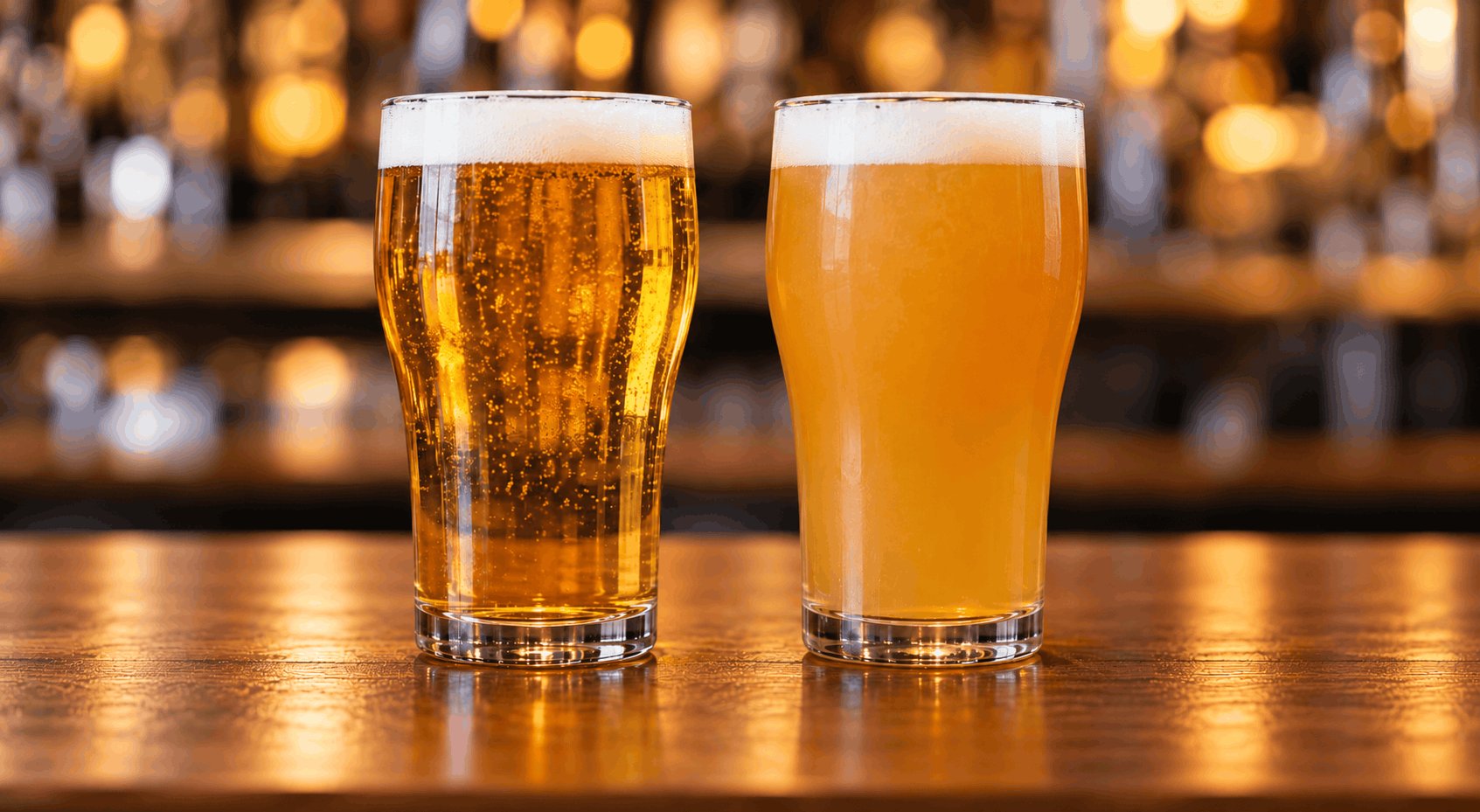
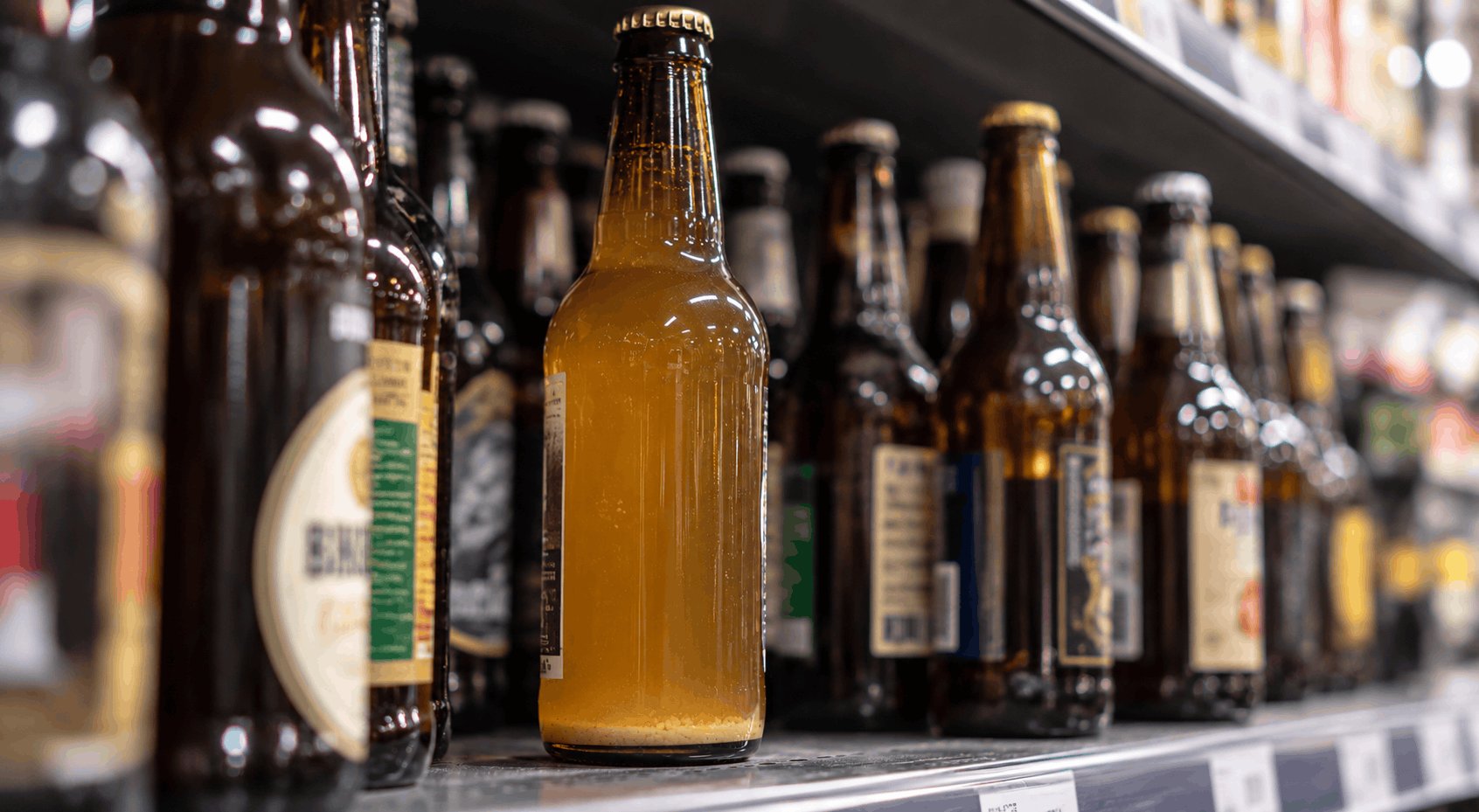
Pass the beer through a filter and it comes out clear and bright. That's how most lagers on the shelf look. Leave it unfiltered and it stays hazy, with a fuller, softer taste, sometimes with notes of bread, fruit or spice.
Haze isn't a fault, it's a style. Bavarian wheat beer has been cloudy for centuries, and nobody in Bavaria sees a problem with that. Sediment at the bottom of the bottle is nothing unusual either. With wheat beer it's customary to swirl it gently and pour it into the glass; with other styles it's usually left in the bottle.
Four combinations
Filtering and pasteurisation don't depend on each other, so all four combinations turn up on the shelf. Beer can be filtered and pasteurised: the everyday supermarket lager. It can be filtered but unpasteurised: clear, but fresh and short-lived. It can be unfiltered but pasteurised, like many bottled wheat beers. And it can be unfiltered and unpasteurised, hazy and fresh. This last one is what most people mean by “live beer”.
Where “live” comes from
“Live beer” has no official definition. It's a seller's word, not a brewer's. In Eastern Europe in the 1990s and 2000s it was used for draught beer in small shops, to set it apart from the bottled kind. Since then “live” has meant unpasteurised beer, unfiltered beer, or simply any draught beer, depending on who's talking.
So it's safer to read the label or the product page than the shop sign. That's where the essentials are: whether the beer is filtered, whether it's pasteurised, and the date it's best opened by.
How Europe looks after live beer
Germany has a style of its own, Kellerbier, “cellar beer”. It is neither filtered nor pasteurised, and it was traditionally poured straight from casks in the cellars of Franconia. Its close relative Zwickel is named after the little tap brewers used to draw a sample from the tank.
The English went further. In 1971 a group of beer lovers founded CAMRA, the Campaign for Real Ale. They opposed pasteurised keg beer and championed cask ale, which finishes maturing in the cask with living yeast. The campaign is still going, with nearly two hundred thousand members. It is probably the only civic movement in the world dedicated to protecting yeast.
How to store it
Unpasteurised beer should be kept cold, ideally at 2–8 °C, upright and away from light. It usually keeps from a few weeks to a couple of months, and the exact date is on the label. Draught beer in a PET bottle is best opened within a day or two: it isn't beer for stockpiling.
Pasteurised beer is less fussy, but sunlight and heat harm it too. Sunlight spoils the taste of beer faster than any critic.
In our catalogue
Every product in our catalogue says whether the beer is filtered. If you'd like to compare for yourself, take a clear lager and a hazy wheat beer and put them side by side. The difference will be obvious without any article, this one included.
We sell alcohol to adults only. We'll ask for ID on pickup.